


















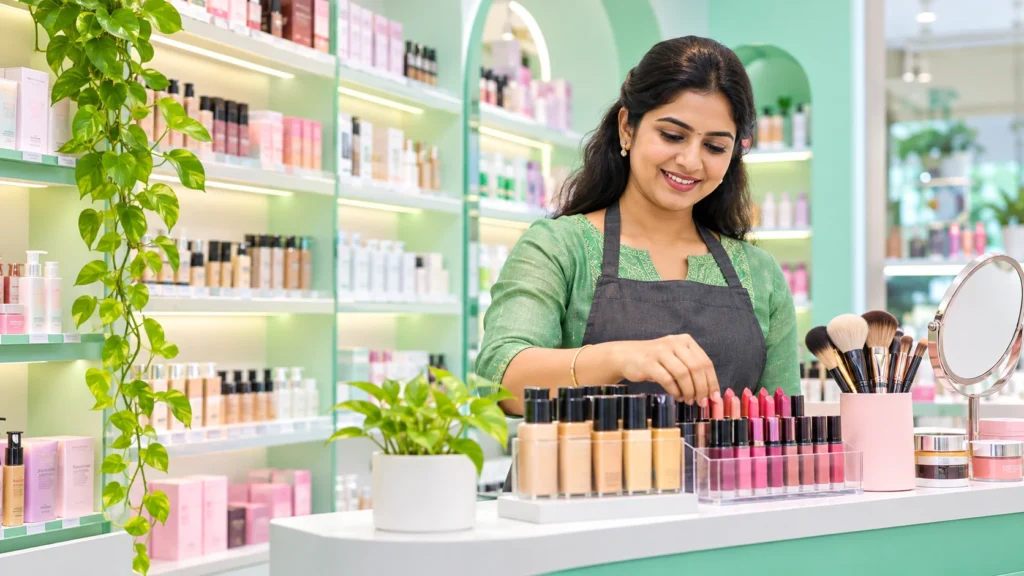
An online presence allows a cosmetics shop to attract local clients to search for beauty items, see the variety of brands offered, compare product details, and contact the store before visiting. I would say begin with a thorough business profile, quality product photos, accurate contact information, local search presence and regular social media updates. Cosmetics stores are able to implement these basic strategies to attract interested shoppers without spending a lot of money on marketing.
Whether you are a tiny makeup shop, skincare store, beauty accessories outlet, or a multi-brand cosmetics business, I think clients should be able to know what you sell before they go into your store. Online business discovery systems like TokoGen for Business share knowledge on how to display your products, offer your business details and interact with your neighbourhood customers.
In this article, I will show you how you may as a cosmetics business owner establish your internet presence, promote your items responsibly, increase local awareness and generate customer loyalty.
Why Is an Online Presence Important for a Cosmetics Shop?
An online presence makes your cosmetics shop easier to discover when potential customers search for makeup, skincare, and beauty products.
Customers may want to compare lipstick shades, explore skincare brands, confirm product availability, or find a nearby cosmetics retailer.
What Benefits Can Online Visibility Provide?
Local discovery: People searching for a cosmetics shop near them can find relevant business information.
Product awareness: Customers can learn about available makeup, skincare, and beauty accessories.
Convenient enquiries: Shoppers can contact your store about specific products before travelling.
Customer confidence: Genuine photographs and accurate product descriptions help people evaluate your shop.
Repeat purchases: Returning customers can follow product updates and learn when familiar items are restocked.
For example, a customer looking for a particular foundation shade may prefer contacting a nearby shop rather than travelling without knowing whether it is available.
Quick Takeaway: Online visibility helps customers discover your cosmetics shop and understand what it offers. I recommend making product information, contact details, and store location easy to find.
How Can I Build an Online Presence for My Cosmetics Shop?
I recommend starting with a few essential digital channels rather than creating multiple profiles that become difficult to maintain.
What Steps Should I Follow?
- Identify your target customers and main beauty product categories.
- Prepare accurate shop information and contact details.
- Create or claim an eligible Google Business Profile.
- Set up a professional Instagram or Facebook business account.
- Photograph your products and organize them by category.
- Publish useful product descriptions and availability information.
- Explore relevant local business discovery platforms.
- Respond to genuine customer enquiries.
- Review which channels generate useful results.
Why Should I Start With a Clear Business Identity?
A shop name that people recognise, photos that look the same and information that is correct, helps people comprehend your business.
For example, a local store that sells economical makeup should reflect that instead of providing a vague description like “all beauty products available.”
Quick Takeaway: Begin building your online presence by providing clear information about your organization and a few digital platforms you can control. I would recommend getting a few profiles to a good standard and then branching out to other platforms.
What Should I Include in My Cosmetics Shop Business Profile?
A complete business profile should answer common customer questions without requiring them to contact the store for every detail.
Which Business Details Are Essential?
| Profile Information | Why It Matters |
| Shop name | Helps customers recognize your store |
| Store address | Supports local discovery and directions |
| Opening hours | Helps shoppers plan visits |
| Contact number | Allows product enquiries |
| Product categories | Explains what your shop sells |
| Brand information | Helps shoppers find suitable products |
| Store photographs | Shows the actual retail environment |
| Product images | Helps customers explore available items |
| Business updates | Communicates new arrivals and changes |
I recommend using real photographs of your shelves, product displays, and shop entrance.
For example, a cosmetics store in Chennai might organize its products into makeup, skincare, haircare, fragrances, and beauty accessories.
Avoid listing brands or products that the store does not actually carry.
Quick Takeaway: A useful cosmetics shop profile combines location, product categories, photographs, and contact details. I recommend keeping information accurate so customers know what to expect.
How Can I Showcase Makeup and Skincare Products Online?
Beauty products are highly visual, so clear product presentation is important.
I recommend creating a small digital catalogue before investing in elaborate advertising campaigns.
How Should I Organize My Products?
| Product Category | Information to Display |
| Lipsticks | Brand, shade, finish and price |
| Foundations | Brand, shade code, formulation and quantity |
| Skincare | Product name, size, ingredients and directions |
| Haircare | Product type, size and intended use |
| Fragrances | Brand, fragrance variant and quantity |
| Beauty tools | Product specifications and material |
How Can I Take Better Product Photographs?
Use natural lighting, clean backgrounds, and sharp images showing the actual product.
For makeup, I suggest including the packaging and shade name so customers can identify the correct variant.
Do not use misleading filters that significantly change product colours.
For skincare, avoid claiming that a product cures medical conditions unless such claims are legally permitted and adequately supported.
Why Should I Check Product Information Before Publishing?
Incorrect shades, ingredients, prices, or pack sizes can create disappointed customers and unnecessary returns.
I recommend verifying information against the manufacturer’s authentic packaging.
Quick Takeaway: Good product presentation makes cosmetics easier to compare. I suggest using genuine photographs, accurate shade details, and clear product descriptions.
How Can Google Business Profile Help My Cosmetics Shop?
Google Business Profile helps eligible retail stores display their information on Google Search and Maps.
I recommend creating or claiming a profile through the official Google Business Profile website.
How Can I Improve My Local Store Profile?
Choose an accurate category: Identify your business as a relevant cosmetics or beauty supply retailer.
Add the correct location: Make sure the address matches the actual store.
Maintain opening hours: Update holiday hours and temporary closures.
Upload photographs: Show the store entrance, interiors, and suitable product displays.
Respond to reviews: Acknowledge genuine feedback professionally.
Review customer actions: Use available performance information to understand how customers interact with the listing.
Google explains that local rankings primarily depend on relevance, distance, and prominence. There is no guaranteed way to purchase a better organic local ranking.
Quick Takeaway: Google Business Profile can improve the discoverability of an eligible cosmetics retailer. I recommend maintaining accurate information, relevant photographs, and genuine customer engagement.
How Can Social Media Attract More Beauty Product Customers?
Social media is a good platform for cosmetics businesses to visually showcase products, and to regularly keep in touch with interested shoppers.
I would say you choose the sites where your real clients are spending their time.
What are some content ideas for a cosmetics shop?
New Arrivals: Display newly stocked makeup and skincare goods.
Product demonstrations: Show how to properly package, hues, textures, and intended uses.
Beauty education: We can discuss product category distinctions. We won’t give any medical advice or make unfounded claims.
Festival collections: Highlight relevant gift sets and seasonal product collections.
– Store news: Share hours, restocks and real deals with customers.
Customer FAQs: Answer any typical queries about product sizes, shade numbers or availability.
How often do I write?
I would propose starting out with three helpful blogs a week, and then tweaking the calendar to see how customers respond.
Say, a cosmetics store might post a lipstick shade comparison on Monday, new skincare arrivals on Wednesday and a weekend store update on Friday.
My advice is to concentrate on informative posts, rather than always posting advertising.
Quick Takeaway: Social media can be used by a cosmetics shop to market products and interact with clients. I propose providing consistent, relevant material instead of relying simply on discounts.
How Can I Build Customer Trust and Sell Genuine Cosmetics?
Trust is particularly important for cosmetics because customers apply these products to their skin, hair, and body.
I recommend purchasing products from legitimate suppliers and preserving their original packaging and identifying information.
What Should I Check Before Stocking Cosmetics?
- Supplier authenticity and purchase invoices.
- Manufacturer or importer information.
- Product batch numbers where applicable.
- Manufacturing and expiry or use-before information.
- Ingredient lists and relevant warnings.
- Packaging condition and storage requirements.
- Applicable Indian regulatory requirements.
India’s Central Drugs Standard Control Organisation provides information about cosmetics regulation, including manufacturing and import requirements.
The Cosmetics Rules, 2020 also prohibit false or misleading cosmetic claims.
How Can I Protect Customer Confidence?
I recommend explaining product information accurately, issuing proper bills, and maintaining transparent return and exchange policies.
Avoid selling products with doubtful authenticity, tampered packaging, or expired shelf lives.
Quick Takeaway: Customer trust depends on genuine products, correct information, and responsible retail practices. I recommend checking supplier documents and applicable cosmetics regulations before selling products.
How Can TokoGen Support My Cosmetics Shop’s Online Visibility?
TokoGen focuses on helping local businesses present useful information and become easier for neighbourhood customers to discover.
Its business information and profile resources describe ways to showcase business details, products, photographs, and contact information.
What Should I Prepare for My TokoGen Business Profile?
I recommend preparing:
- Your cosmetics shop name and correct address.
- Opening hours and contact information.
- Main product categories.
- Genuine shop and product photographs.
- A clear description of your store.
- Updated information about the products you carry.
- Relevant offers, where supported.
For example, a beauty retailer could describe its makeup collection, skincare brands, beauty accessories, and store location so customers understand what is available.
TokoGen provides information about potential business and shopping features. Current listing, promotional, ordering, and payment functionality should be confirmed before relying on any individual feature.
Quick Takeaway: TokoGen can form part of a cosmetics shop’s local discovery strategy. I recommend using accurate business information and checking the platform’s available profile features.
Do I Need a Website to Grow My Cosmetics Shop?
No, a cosmetics shop does not necessarily need its own website to begin building an online presence.
I recommend starting with a Google Business Profile, relevant social media channels, and suitable local business listings.
When Should I Consider a Dedicated Website?
A website may become useful when you need:
- Detailed product catalogues.
- Product search and filtering.
- Store policy information.
- Online enquiries or ordering.
- Multiple store locations.
- Search-optimized product and category pages.
For example, a cosmetics retailer selling hundreds of beauty products may find a structured website more practical than maintaining product information only through social media.
I suggest evaluating setup costs, maintenance, security, and expected sales before investing.
Quick Takeaway: A website can support long-term business growth, but it is not the first requirement for every cosmetics shop. I recommend establishing accurate business profiles before investing in a larger ecommerce system.
How Can I Convert Online Enquiries Into Store Visits and Sales?
Online visibility becomes useful when interested customers can find suitable products and complete their purchases.
I recommend making the enquiry process simple and providing accurate answers.
What Should I Do When Customers Contact My Shop?
Confirm product availability: Check the exact brand, size, and shade.
Share accurate prices: Explain the current selling price and any applicable conditions.
Provide store information: Share the correct address and opening hours.
Clarify collection arrangements: Explain when the item can be collected, if your shop offers reservations or pickups.
Respect customer privacy: Do not add people to promotional messaging lists without appropriate permission.
How Can I Improve Repeat Purchases?
I advocate having commonly requested products in stock and announcing restocks through channels customers have agreed to utilise.
For example, a customer purchasing a foundation may return when the same shade becomes available again.
Quick Takeaway: Turning enquiries into sales requires precise information and convenient communication. I recommend responding swiftly and clarifying product specifics before clients visit.
How Can I Measure My Cosmetics Shop’s Online Growth?
I recommend monitoring real business outcomes rather than focusing only on followers and likes.
Which Metrics Should I Track?
| Metric | What It Measures |
| Business profile visits | Interest in the shop listing |
| Product enquiries | Customer questions about cosmetics |
| Store direction requests | Interest in visiting the shop |
| Social media engagement | Interactions with published content |
| Confirmed purchases | Sales associated with enquiries |
| Repeat customer rate | Customer retention |
| Marketing expenses | Costs of promotions |
How Can I Calculate Enquiry Conversion?
Say your cosmetics shop receives 100 inquiries about authentic products and 20 of them become completed transactions.
The example enquiry-to-purchase conversion rate is:
(20 ÷ 100) × 100 = 20%.
This is a fictional example and not an industry standard.
I recommend asking clients where they heard about the company, and keeping track of it (while maintaining their privacy) so that marketing decisions can be based on actual outcomes.
Quick Takeaway: Online growth should be measured in terms of useful queries, visits, purchases, and client retention. I suggest evaluating these numbers on a monthly basis.
What Common Online Marketing Mistakes Should I Avoid?
Cosmetics retailers can waste time and money when their digital presence does not reflect the actual shop.
1. Using Poor-Quality Product Photographs
Blurry or heavily edited images make products difficult to evaluate.
2. Advertising Unavailable Products
Customers may lose confidence when advertised shades or brands are repeatedly out of stock.
3. Making Unsupported Skincare Claims
Avoid promising guaranteed whitening, permanent results, or cures for skin conditions.
4. Ignoring Customer Messages
Unanswered enquiries may result in missed sales opportunities.
5. Depending Entirely on Discounts
Excessive promotions can reduce margins without creating long-term loyalty.
6. Selling Products Without Authenticity Checks
I recommend verifying suppliers and product information before publishing or selling items.
Quick Takeaway: Common marketing mistakes involve misleading product information, weak communication, and inconsistent availability. I suggest solving these problems before increasing advertising spending.
How Can I Grow My Cosmetics Shop in the Long Term?
The foundation of long-term business success is continuous product quality, straightforward communication, customer satisfaction and efficient inventory management.
It is recommended to know what cosmetics people buy over and over again and to have these goods in stock as much as possible.
Forming relationships with adjacent beauty salons, makeup artists and other relevant businesses may also result in helpful referral chances.
For additional ideas on beauty businesses that pair well together, see TokoGen’s guide to creating a salon and wellness business.
An emerging cosmetics shop can’t depend on its web presence. It should mix a good internet presence with real products, correct product information, appropriate prices and reliable service.
Neighbourhood discovery minded business owners can also look at TokoGen for Business to know how to create a clearer digital identity for their establishments.
Quick Takeaway: Growth of sustainable cosmetics shops depends on trustworthy items, constant customer service, precise stock details, and local visibility. I would suggest you build a stronger foundation before increasing marketing expenses.
Frequently asked questions
How can I promote my cosmetics shop online?
Start with a Google Business Profile, professional social media accounts, genuine product photographs, and accurate contact details. I recommend sharing new arrivals, product information, and useful beauty content to help interested customers discover your store.
Can I grow a cosmetics shop without a website?
Yes, a cosmetics shop can begin promoting itself through business listings, local discovery platforms, and social media. I recommend keeping product details and contact information accurate. Consider a dedicated website when your catalogue and business requirements become more complex.
Which social media platform is best for a cosmetics shop?
Instagram is often useful for visual makeup and skincare content, while Facebook and other channels may help reach different customer groups. I recommend choosing platforms based on your local audience and measuring enquiries rather than assuming one platform works for everyone.
How can I attract more customers to my makeup store?
Improve local search visibility, showcase available brands, publish clear product photographs, and provide helpful customer service. I recommend sharing accurate shade information and responding to stock enquiries because customers often need specific beauty product variants.
How can I build customer trust when selling cosmetics online?
Sell genuine products, verify supplier invoices, maintain original packaging, and communicate accurate product information. I recommend checking expiry dates, applicable labels, and customer concerns. Avoid unsupported cosmetic claims or misleading product demonstrations.