





















Madurai Vegetable Shop Owners can reduce waste and improve daily sales by purchasing the right quantities, storing vegetables correctly, rotating stock, offering timely discounts, creating attractive displays, reaching nearby customers and tracking daily business performance.
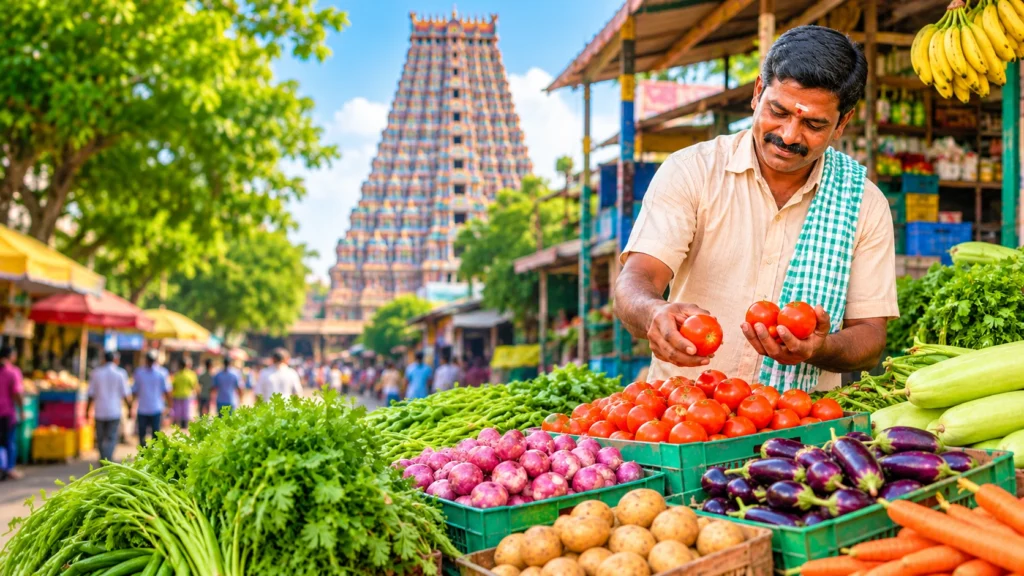
Running a vegetable shop in Madurai involves making important decisions every morning. Owners need to purchase fresh vegetables, manage fluctuating prices, attract customers and sell as much stock as possible before its quality declines.
Tomatoes may become soft, leafy greens may wilt, and unexpected changes in demand can leave shop owners with vegetables they cannot sell.
For small retailers, even a few kilograms of spoiled produce every day can affect monthly earnings.
I recommend improving daily purchasing and stock handling before spending heavily on promotions. Accurate customer communication and a clean shopping environment can also help attract repeat buyers.
Local business discovery platforms such as TokoGen can be explored to help nearby customers find grocery shops and learn about their offerings.
Here are seven practical ways Madurai vegetable retailers can manage waste and create better sales opportunities.
1. How Can Madurai Vegetable Shop Owners Plan Purchases Based on Daily Demand?
Buying the right quantity is one of the most important steps in reducing vegetable waste.
Some vegetables sell quickly, while others may remain unsold for several days. Purchasing the same quantity every morning without checking previous sales can lead to unnecessary stock.
Track Your Best-Selling Vegetables
I recommend recording the daily purchases and sales of major products such as tomatoes, onions, potatoes, brinjal, carrots and leafy greens.
| Vegetable | Purchased | Sold | Closing stock |
| Tomatoes | 30 kg | 26 kg | 4 kg |
| Potatoes | 35 kg | 32 kg | 3 kg |
| Brinjal | 20 kg | 17 kg | 3 kg |
| Carrots | 15 kg | 13 kg | 2 kg |
| Spinach | 20 bunches | 15 bunches | 5 bunches |
Illustrative daily stock figures, not actual market data.
Closing stock is not automatically waste. Inspect it and separate usable inventory from damaged produce.
Adjust Purchases Based on Demand
A shop in Anna Nagar may have a different sales pattern from a shop in Thiruparankundram or near a busy market.
I suggest reviewing weekday demand, weekend shopping and seasonal changes before adjusting quantities.
Compare Suppliers Carefully
If buying from a wholesale market, check product quality, purchase price, transport charges and expected shelf life.
The lowest purchase price does not always represent the lowest total cost if vegetables arrive damaged or deteriorate quickly.
Quick Takeaway: Better purchasing begins with accurate sales records. Buying quantities based on real customer demand helps reduce excess stock and protect working capital.
2. How Can Vegetable Shops Keep Produce Fresh in Madurai’s Hot Weather?
Heat and unsuitable storage can reduce vegetable quality.
Madurai’s warm conditions make it especially important for shop owners to consider shade, ventilation and careful handling, although different vegetables require different storage environments.
The FAO identifies direct sun exposure, moisture loss and mechanical damage as important contributors to fresh produce deterioration.
FAOHome+1
Protect Vegetables From Direct Sunlight
I recommend keeping produce under suitable shade rather than exposing it to prolonged sunlight.
Use Clean, Suitable Containers
Crates can help protect vegetables when they are not overloaded.
Avoid stacking heavy products on delicate tomatoes, leafy vegetables or other easily damaged produce.
Store Different Vegetables Appropriately
| Vegetable type | General handling priority |
| Leafy greens | Prevent wilting through suitable cool, hygienic storage |
| Tomatoes | Avoid crushing and inappropriate temperatures |
| Potatoes | Protect from light and unsuitable moisture |
| Onions | Maintain suitable dry, ventilated conditions |
| Brinjal | Handle gently and avoid unsuitable cold storage |
| Carrots | Prevent dehydration using suitable storage |
Exact conditions depend on the variety, maturity and expected storage period.
Check for Spoilage
Inspect vegetables regularly and remove rotten or contaminated produce promptly.
FSSAI advises regular inspection of displayed fruits and vegetables and removal of poor-quality items from sale.
FSSAI
Quick Takeaway: Shade, careful handling, hygiene and produce-specific storage can help reduce spoilage. Freshness protection should begin when vegetables arrive, not only when the shop closes.
3. How Can Stock Rotation Prevent Vegetable Waste?
Vegetables from previous purchases may remain underneath newer stock if the shop does not follow a rotation process.
I recommend checking the condition and receiving date of produce before refilling displays.
Apply First-In, First-Out Where Appropriate
FIFO means using or selling older inventory before newer inventory when the older stock remains safe and acceptable.
However, actual freshness and food safety must take priority over receiving order.
Separate Vegetables by Condition
Organise stock into three categories:
- Fresh, suitable produce for normal sales.
- Safe and saleable produce requiring earlier attention.
- Spoiled or otherwise unsafe produce that must be removed from food sales.
Inspect Stock at Key Times
Check displays at opening, around midday and before closing.
Record which products become damaged most frequently.
The FAO recommends regular inspection and cleaning of produce storage areas to reduce losses.
FAOHome
Quick Takeaway: Stock rotation helps prevent older vegetables from being forgotten. Regular inspections also help identify problems before spoilage spreads to other produce.
4. How Can Smart Pricing and Vegetable Bundles Increase Daily Sales?
Some vegetables remain safe and suitable for consumption but may need to be sold sooner than others.
I recommend introducing clear, timely offers rather than waiting until produce has deteriorated.
Offer Suitable End-of-Day Discounts
For example, a shop may offer a reduced price for a batch of safe vegetables that is unlikely to remain saleable much longer.
Explain the price and product condition honestly.
Never discount spoiled vegetables for human consumption.
Create Useful Vegetable Bundles
A shop could test bundles for common cooking needs.
| Bundle idea | Possible items |
| Sambar vegetables | Drumstick, brinjal, tomato and other suitable vegetables |
| Poriyal vegetables | Beans, carrots and other seasonal options |
| Basic cooking pack | Onion, tomato, potato and green chilli |
| Greens selection | Available fresh leafy greens |
These are suggested promotional concepts, not prescribed recipes or guaranteed sales strategies.
Calculate Your Discount Carefully
Suppose a shop purchases vegetables for ₹200 and sells them for ₹260.
The gross profit before other costs is ₹60.
If the shop reduces the selling price to ₹235, gross profit becomes ₹35.
I recommend comparing the reduced margin against the potential cost of leaving saleable produce unsold.
Quick Takeaway: Timely discounts and practical bundles may help move safe surplus stock. Discounts should be based on actual costs, product condition and customer demand.
5. How Can Clean and Attractive Vegetable Displays Improve Customer Purchases?
Customers often evaluate vegetable freshness visually.
A clean shop with organised produce and visible prices can make shopping easier.
I recommend presenting vegetables in a way that protects their quality while helping customers find what they need.
Arrange Vegetables by Category
Keep leafy greens, root vegetables and delicate produce in suitable sections.
Avoid piling excessive quantities into one display.
Make Prices Easy to Understand
Display prices clearly, including the relevant unit, such as per kilogram or per bunch.
Maintain a Clean Shopping Area
Keep walkways clear, remove discarded leaves and damaged produce, and clean weighing and display equipment regularly.
Replenish Displays Carefully
Instead of exposing all inventory at once, replenish suitable amounts as customers purchase vegetables.
This can reduce unnecessary handling and exposure under poor display conditions.
Quick Takeaway: Organised displays and transparent prices make shopping more convenient. Retail presentation should support food hygiene, product freshness and customer confidence.
6. How Can Madurai Vegetable Shop Owners Attract Nearby Customers Without Expensive Ads?
Reducing waste is important, but vegetable shops also need sufficient customer demand to sell their produce.
I recommend using accurate online business information and relevant customer communication before investing in large advertising campaigns.
Improve Google Maps Visibility
Eligible vegetable retailers can create or update a Google Business Profile.
Add the correct shop name, location, business category, opening hours and contact number.
Google confirms that local visibility primarily depends on relevance, distance and prominence. Complete business information can help, but higher rankings are not guaranteed.
Google Business Profile Help
Share Daily Arrivals Through WhatsApp
Customers may appreciate information about fresh vegetables available that day.
An example message is:
🥬 Fresh Vegetables Available Today!
Fresh tomatoes, onions, potatoes, brinjal, carrots and seasonal greens are available at our shop.
Contact us for today’s prices and stock availability.
📍 [Vegetable Shop Name], Madurai
📞 [Shop Contact Number]
Send promotional messages only to customers who have agreed to receive them.
Explore TokoGen for Local Discovery
TokoGen’s public website describes local shops, groceries and neighbourhood product discovery.
LocalConnect
I recommend checking the current business listing options and sharing accurate shop information where the relevant category is supported.
Encourage Repeat Customers
Accurate weighing, fair prices, fresh produce and respectful service can encourage shoppers to return.
Quick Takeaway: Local online visibility and dependable customer communication can help vegetable shops reach nearby buyers. Genuine product availability and customer trust are more important than promotional claims.
7. How Can Daily Sales and Waste Records Help Vegetable Shops Improve Profit?
A vegetable shop owner may know how much money was collected during the day but not how much profit remained after purchases, spoilage and operating costs.
I recommend recording inventory and expenses to understand actual business performance.
Track Four Important Numbers
Record the quantity purchased, quantity sold, quantity discarded and cost of usable closing inventory.
Calculate Your Vegetable Wastage Rate
WastageRate=UnsaleableQuantityQuantityPurchased100
Suppose a shop purchases 100 kg of vegetables and 8 kg becomes unsaleable.
The wastage rate is:
\[ \frac{8}{100}\times100=8\% \]
Example Daily Sales Record
| Metric | Illustrative amount |
| Opening inventory at cost | ₹0 |
| New vegetable purchases | ₹5,000 |
| Sales revenue | ₹6,000 |
| Usable closing stock at cost | ₹500 |
| Cost of goods sold, including wastage | ₹4,500 |
| Gross profit | ₹1,500 |
The example assumes there are no other inventory adjustments. Gross profit is calculated before rent, labour, transport and other operating expenses.
I recommend tracking the cost of discarded vegetables separately so owners can identify preventable losses.
Compare Week-to-Week Performance
If wastage declines but sales also fall sharply, the business may be purchasing too little stock.
Review freshness, sales, customer requests and profitability together.
Quick Takeaway: Simple daily records help owners understand what they sell, what remains and what is lost. The goal is to reduce avoidable waste while maintaining sufficient stock for customers.
How Can Madurai Vegetable Shops Apply These Seven Strategies in 30 Days?
A month-long plan can help shop owners introduce improvements gradually.
| Week | Main focus | Recommended actions |
| Week 1 | Purchasing and stock records | Measure daily purchases, sales, remaining stock and discarded quantities |
| Week 2 | Freshness and storage | Improve shade, handling, display conditions and stock rotation |
| Week 3 | Sales promotion | Test safe surplus discounts, practical bundles and local customer updates |
| Week 4 | Profit and performance | Compare wastage, revenue, gross margins and customer feedback |
I recommend selecting a few high-waste products for the first trial rather than changing every purchasing decision at once.
What Could a Reduction in Waste Mean Financially?
Consider a hypothetical shop that purchases ₹5,000 of vegetables daily.
If the value of unsaleable produce falls from 10% to 6% of purchases:
Original daily waste cost
₹500
10% of ₹5,000
Improved daily waste cost
₹300
6% of ₹5,000
ILLUSTRATIVE REDUCTION IN WASTE COST OVER 30 DAYS
₹6,000
₹200 per day × 30 days, assuming unchanged purchases and other conditions. This is avoided stock loss, not guaranteed additional net profit.
Quick Takeaway: Small improvements in vegetable handling and purchasing can accumulate over time. Measure actual savings and additional operating expenses before concluding how much profit has improved.
What Mistakes Should Madurai Vegetable Shop Owners Avoid?
Common mistakes include buying too much stock without reviewing demand, leaving produce exposed to direct sunlight, stacking vegetables carelessly, mixing spoiled produce with healthy stock, and failing to monitor closing inventory.
Another mistake is offering vegetables at a discount after they are no longer safe to consume.
I recommend following FSSAI’s relevant food safety and hygiene guidance, rather than relying on appearance alone when evaluating unsafe or contaminated produce.
FSSAI
Quick Takeaway: Good purchasing decisions must be supported by appropriate storage, hygiene and stock inspection. Food safety should never be compromised to recover the cost of unsold produce.
Frequently asked questions
How can Madurai vegetable shop owners reduce daily waste?
Begin by recording daily purchases, sales and discarded quantities. I recommend buying according to demand, keeping produce under suitable conditions and inspecting it regularly. Smaller purchases of highly perishable items may help when supplier availability and transport costs make that practical.
How can I increase daily sales in my vegetable shop?
Improve product freshness, organise displays, maintain visible prices and offer reliable customer service. I suggest exploring local business listings and sharing accurate daily stock information with interested customers. Track completed sales rather than assuming online views represent purchases.
Which vegetables spoil quickly in hot weather?
Leafy greens and some delicate vegetables can lose quality quickly when exposed to unsuitable heat, moisture loss or rough handling. I recommend checking the specific storage requirements of each product and avoiding one storage method for every vegetable.
Can discounts help reduce vegetable shop waste?
Yes, timely discounts can help sell safe, saleable produce that might otherwise remain unsold. I suggest introducing price reductions before significant deterioration and checking whether the reduced price still makes commercial sense.
How can I promote my vegetable shop in Madurai without paid advertising?
Maintain accurate business information on suitable local platforms, share relevant availability updates with consenting customers and build repeat business through dependable service. A clear shop location, opening hours and working contact number are useful starting points.