




















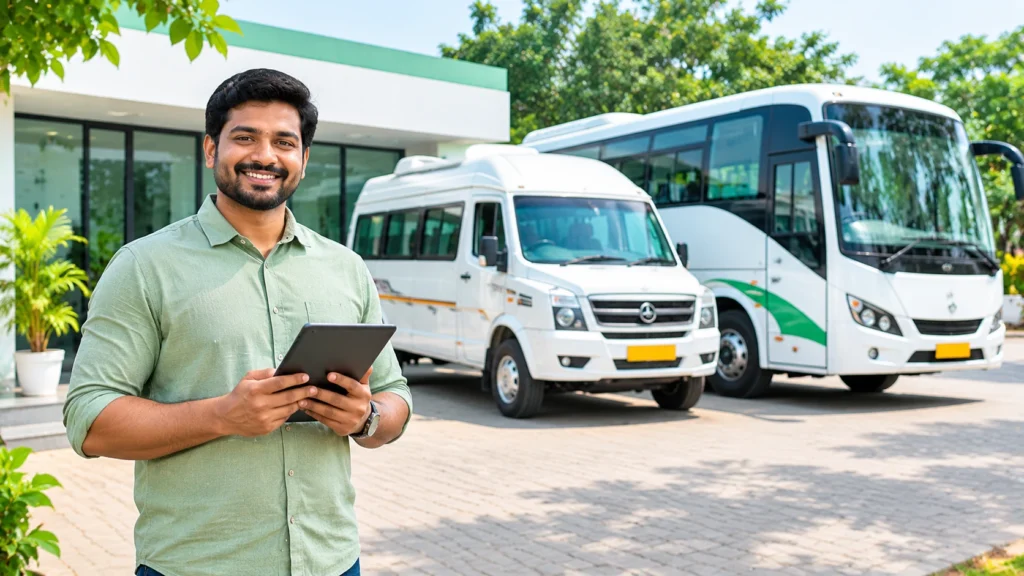
The best marketing strategies for bus and van rental owners combine local online visibility, clear vehicle information, fast quotations, trustworthy service, and long-term customer relationships. I recommend starting with Google Business Profile, targeting suitable group travel customers, displaying actual vehicle photographs, building local partnerships, and measuring confirmed bookings rather than social media followers.
Whether you operate a tourist bus, minibus, Tempo Traveller, or passenger van rental business, attracting consistent bookings requires more than owning well-maintained vehicles. Customers want to understand seating capacity, rental prices, trip arrangements, safety standards, and availability before making a decision. I recommend building a clear online presence through channels such as TokoGen for Business, which provides information about presenting local services and business contact details.
In this guide, I explain eight practical marketing strategies that bus and van rental owners can use to attract relevant enquiries, improve bookings, and grow sustainably.
1. How Can I Use Google Business Profile to Attract Local Rental Customers?
Google Business Profile helps eligible transport businesses display relevant information on Google Search and Maps.
I recommend creating or claiming your business profile through Google Business Profile.
What Should I Add to My Rental Business Listing?
Include your official business name, actual location or eligible service area, contact number, working hours, and an accurate business category.
Upload photographs of the buses and vans you operate. Show the exterior, passenger seating, luggage space, and other genuine features.
For example, a rental operator in Madurai could describe available group transportation services and relevant service areas without creating misleading listings for places where the business does not operate.
How Can I Improve Local Visibility?
Keep your information consistent across business directories and your website.
Google explains that local search results mainly depend on relevance, distance, and prominence. No business can guarantee the top position simply by adding keywords.
Quick Takeaway: Google Business Profile helps potential customers find and evaluate a rental operator. I recommend maintaining accurate business information, genuine vehicle photographs, and appropriate service descriptions.
2. How Can I Create an Online Business Profile That Generates Enquiries?
A professional online profile should answer customers’ most important questions before they contact the rental company.
I recommend preparing a digital catalogue covering every vehicle available for hire.
Which Details Should Bus and Van Owners Display?
| Profile Information | Why Customers Need It |
| Vehicle category | Identifies bus, minibus, or van options |
| Seating capacity | Helps select a suitable vehicle |
| Vehicle photographs | Shows actual condition and interior |
| Available facilities | Explains AC, luggage space, and other features |
| Pickup location | Clarifies where the service begins |
| Service coverage | Explains eligible destinations |
| Contact details | Enables booking enquiries |
| Quotation process | Explains how prices are confirmed |
How Can TokoGen Support Local Discovery?
TokoGen’s business resources describe profile information, service details, photographs, contact options, and business updates.
Bus and van rental owners can explore whether their service category is currently supported and which profile options are available.
I recommend verifying the platform’s current capabilities before advertising direct booking or payment functions through it.
Quick Takeaway: A detailed business profile helps people compare vehicle rental options and contact the operator. I suggest prioritizing correct seating capacity, vehicle images, and clear enquiry instructions.
3. How Can I Market Different Bus and Van Rental Services?
Different customer groups hire passenger vehicles for different purposes.
I recommend creating targeted promotional messages instead of advertising every vehicle with the same generic description.
Which Customers Should I Target?
| Customer Group | Typical Rental Requirements |
| Wedding families | Guest transportation and scheduled pickups |
| Tour groups | Multi-day trips and luggage capacity |
| Pilgrimage groups | Planned routes and comfortable travel |
| Companies | Employee transport and official outings |
| Event organizers | Group arrivals and departures |
| Educational institutions | Authorized trips with applicable safety requirements |
| Families | Local and outstation group travel |
How Can I Create Targeted Marketing?
A wedding group may prioritize punctual pickup, seating capacity, and coordination with the event organizer.
A corporate customer may prioritize documentation, consistent availability, accurate invoices, and reliable schedules.
For example, a 12-seat passenger van and a larger tourist bus should not be promoted as interchangeable. I recommend describing the capacity and trip suitability of each vehicle accurately.
Quick Takeaway: Customer-focused marketing makes rental advertisements more relevant. I recommend matching actual vehicle capabilities to specific travel requirements and avoiding generic offers.
4. How Can Social Media Help Me Promote My Rental Vehicles?
Social media allows rental operators to present their fleet visually and explain available services.
I recommend publishing real vehicle photographs and informative content that answers customer questions.
What Content Should I Share?
Vehicle introductions: Show seating capacity, interior condition, luggage space, and genuine facilities.
Trip preparation tips: Explain what customers should confirm before hiring group transportation.
Seasonal updates: Highlight available services for weddings, holidays, and planned tours.
Business updates: Communicate operating hours, fleet additions, and relevant service changes.
Customer feedback: Share genuine experiences only with appropriate permission.
How Frequently Should I Post?
I suggest starting with two or three useful posts each week.
For example, one post could introduce a van’s interior, another could explain quotation requirements, and a third could describe the rental enquiry process.
Avoid sharing passenger photographs, travel details, or personal information without authorization.
Quick Takeaway: Social media can help customers understand what a rental operator offers. I recommend using authentic fleet photographs, useful information, and consistent updates rather than relying entirely on discounts.
5. How Can Local Partnerships Bring More Rental Enquiries?
Partnerships can introduce bus and van rental owners to organizations that regularly arrange group transportation.
I recommend approaching complementary businesses that serve relevant customers.
Which Businesses Can I Partner With?
Travel agencies: Discuss suitable group tours and passenger transportation arrangements.
Hotels: Provide information about genuine local sightseeing and group transport services.
Wedding planners: Explore scheduled transport for guests and wedding parties.
Event management companies: Discuss transportation for conferences and celebrations.
Corporate offices: Offer properly documented quotations for eligible employee or group travel.
Tour organizers: Explore lawful arrangements for planned group journeys.
How Can I Build Strong Partnerships?
Prepare a professional company profile with vehicle details, approved operating scope, contact information, and clear quotation procedures.
I recommend defining commercial terms in writing and avoiding undisclosed or improper referral arrangements.
For example, a Madurai travel organizer arranging a group visit to nearby destinations may need a vehicle with suitable passenger capacity and trip permissions.
Quick Takeaway: Local partnerships can generate relevant group transport enquiries. I recommend working with organizations whose travel requirements match your fleet and operating permissions.
6. How Can Transparent Pricing Help Me Convert Enquiries Into Bookings?
Customers need to understand what they will pay before confirming a rental.
I recommend preparing itemized quotations rather than advertising a low starting price without explaining additional charges.
Which Charges Should a Quotation Explain?
Depending on the service, relevant details may include the vehicle rental amount, distance allowance, additional kilometre charges, driver allowance, tolls, parking, taxes, waiting time, and cancellation conditions.
Explain whether charges are included or excluded.
How Can I Estimate Trip Profitability?
Consider this hypothetical booking:
| Particulars | Amount |
| Quoted rental revenue | ₹15,000 |
| Fuel cost | ₹4,500 |
| Driver-related cost | ₹1,500 |
| Toll and parking expenses | ₹1,000 |
| Allocated vehicle operating costs | ₹2,000 |
| Estimated remaining contribution | ₹6,000 |
This example is illustrative, not a standard rental price or profit benchmark. Other costs, including financing, administration, maintenance, and applicable taxes, must be considered.
I recommend confirming applicable permits, route restrictions, and legal requirements before accepting a journey.
Quick Takeaway: Transparent quotations help customers compare rentals confidently. I suggest explaining all applicable charges and checking actual operating expenses before confirming prices.
7. How Can I Build Customer Trust and Encourage Repeat Bookings?
Reliable operations are essential for long-term transport business growth.
I recommend making safety, punctuality, vehicle condition, and professional communication part of the customer experience.
Which Trust Factors Matter Most?
Vehicle condition: Maintain vehicles according to applicable inspection and maintenance requirements.
Qualified drivers: Ensure drivers hold the appropriate valid licences and meet applicable commercial transport requirements.
Documentation: Maintain valid registration, insurance, permits, fitness certificates, and other legally required records.
Accurate capacity: Never advertise or carry more passengers than permitted.
Customer communication: Explain pickup arrangements, trip conditions, and changes clearly.
What Transport Regulations Should I Check?
India’s All India Tourist Vehicles (Permit) Rules, 2023 were amended in 2026.
I recommend checking the current Ministry of Road Transport and Highways requirements and the relevant state transport authority before advertising interstate trips.
Permit conditions vary by vehicle and service type. Transport for schools, employees, or contract groups may involve additional or different requirements.
How Can I Encourage Repeat Customers?
After a completed trip, request genuine feedback and make future enquiries convenient.
Only send promotional messages to customers who have agreed to receive them.
Quick Takeaway: Repeat rental bookings depend on dependable service and compliant operations. I recommend prioritizing lawful vehicle use, professional drivers, honest communication, and passenger safety.
8. How Can I Measure Marketing Results and Improve Fleet Utilization?
Effective marketing should produce useful enquiries and profitable bookings.
I recommend tracking a few important figures every month.
Which Business Metrics Should I Monitor?
| Metric | What It Measures |
| Rental enquiries | Interest in your services |
| Confirmed bookings | Enquiries converted into actual trips |
| Enquiry conversion rate | Efficiency of sales communication |
| Vehicle utilization | How often available fleet capacity is used |
| Revenue per vehicle | Commercial performance |
| Operating cost per trip | Expense control |
| Repeat bookings | Customer retention |
| Advertising cost per booking | Marketing efficiency |
How Can I Calculate Booking Conversion?
Suppose your business receives 80 genuine rental enquiries and confirms 20 bookings.
Booking conversion rate = (20 ÷ 80) × 100 = 25%.
This is an illustrative example, not an industry benchmark.
How Can I Reduce Idle Vehicle Time?
Review demand patterns and promote suitable vehicles for different periods.
For example, group tourism bookings may vary by season, while some corporate contracts can provide more predictable schedules.
I recommend comparing expected revenue with fuel, driver, vehicle, and compliance costs before accepting a contract.
Quick Takeaway: Sustainable fleet growth depends on confirmed bookings, sound pricing, and efficient vehicle use. I recommend measuring profitability alongside enquiry volumes rather than treating every booking as equally valuable.
How Can Bus and Van Rental Owners Grow Their Business Sustainably?
A successful bus and van rental business needs more than advertising. I recommend combining accurate online information, practical customer targeting, professional quotations, dependable transport operations, and long-term business relationships.
Start by improving your Google Business Profile and creating a clear fleet catalogue. Then identify suitable customer segments, approach relevant local partners, and measure which channels generate profitable bookings.
Owners interested in neighbourhood discovery can explore TokoGen for Business to understand how local service businesses can present their information online.
The most valuable next step is to audit your current listings, vehicle information, rental terms, and enquiry process before investing in additional marketing.
Quick Takeaway: Bus and van rental growth comes from local discoverability, clear service information, reliable operations, and disciplined financial management. I recommend strengthening these fundamentals before expanding your fleet.
Frequently asked questions
How can I promote my bus rental business locally?
Create an accurate Google Business Profile, publish genuine vehicle photographs, and build relationships with travel agencies, hotels, and event organizers. I recommend including seating capacity, operating areas, and contact details in every listing so customers can identify suitable transport options.
How can van rental owners get more bookings?
Van rental owners can improve bookings through targeted local search visibility, clear quotations, social media, and customer referrals. I recommend focusing on suitable groups such as families, tourists, and event organizers while maintaining reliable vehicle availability and professional communication.
Which social media platform is best for bus and van rentals?
The most suitable platform depends on your customers. Facebook and Instagram can showcase vehicles visually, while other channels may be useful for business contacts. I recommend testing relevant channels and comparing confirmed rental enquiries rather than assuming the platform with the most followers is best.
How can I advertise a Tempo Traveller rental service?
Show actual vehicle photographs, seating capacity, passenger facilities, and relevant trip arrangements. I recommend creating useful content for weddings, pilgrimage groups, family travel, and corporate outings, while confirming that advertised journeys comply with your vehicle's permits.
How can bus rental owners get corporate transport contracts?
Prepare a professional fleet profile, valid vehicle documents, reliable quotations, and information about service capacity. I recommend contacting relevant corporate administration or procurement teams and understanding their operational requirements before proposing transport arrangements.