












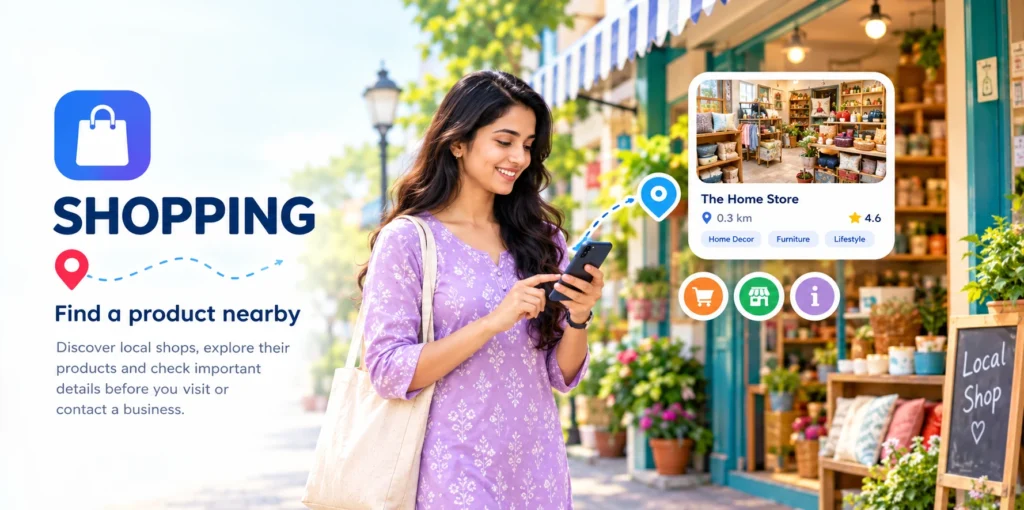
Shopping locally allows you to obtain needed items while comparing prices, quality, and reliability among your neighborhood stores. I recommend listing your shopping needs, familiarizing yourself with the local shops, and verifying all the necessary parameters. Thanks to local shopping, you won’t waste time traveling and will have an opportunity to view and touch the goods with your own hands and learn about local companies.
No matter if you are shopping for food, clothing, electronics, home products, or gifts, finding the right store makes the process easier. It’s better to compare your options before buying. You can check TokoGen’s local shopping guide for further assistance in your offline shopping journey.
In this manual, you will find out how to find stores nearby, compare items, avoid unnecessary expenses, and make the best local shopping decisions.
What Is Local Shopping and Why Does It Matter?
When we talk about local shopping, we refer to buying products from nearby stores such as food outlets, clothing stores, electronic device shops, bookstores, baking, or household goods.
Why Should I Consider Shopping Nearby?
I suggest local shopping if convenience, inspecting products, and having products available immediately or receiving assistance in the shop are important.
For example, if you need a phone charger very quickly, it is better to look for a shop close to your place than wait for the delivery.
Local shops are able to assist customers in understanding the product’s specifications, comparing options, and asking questions prior to making the purchase.
However, shopping locally does not mean obtaining a good price or great quality. It is better to check the specifics of each shop.
Summary: Local shopping gives access to local sellers and products. If you need convenience, the possibility of inspecting products directly before purchasing them, and availability, local shopping is the best option for you.
How Can I Find the Best Local Stores Near Me?
Finding suitable local stores starts with knowing exactly what you want to purchase.
I recommend following a simple discovery process instead of visiting several shops without checking their details.
Step 1: Identify What You Need
Prepare a short shopping list containing the product name, preferred size, brand, budget, and quantity.
For example, instead of searching for “electronics near me,” look for “USB-C laptop charger shops near me.”
Step 2: Search by Product and Location
Use searches such as “grocery stores near me,” “clothing shops in Anna Nagar,” or “stationery stores near my location.”
Google’s official Maps search guide explains how to search for nearby places and explore business information.
Step 3: Compare Available Store Information
Check the store address, opening hours, product categories, customer feedback, and contact details.
Step 4: Confirm Important Details
Contact the retailer to ask whether the product is available and whether its price or specifications match your requirements.
Step 5: Choose the Most Convenient Option
Consider travel distance, total cost, product suitability, and store accessibility before deciding.
Quick Takeaway: Finding the best local store requires more than choosing the nearest result. I recommend comparing relevant shops and confirming availability before travelling.
Which Types of Local Shops Should I Explore?
Different local stores serve different shopping needs. I recommend selecting the category that best matches the products you want.
| Local Store Category | Common Products | Best Suited For |
| Grocery and essentials | Vegetables, food and household supplies | Everyday purchases |
| Fashion and accessories | Clothing, footwear and bags | Personal shopping |
| Electronics | Mobile accessories, appliances and devices | Technology needs |
| Jewellery and gifts | Accessories, presents and decorations | Special occasions |
| Books and stationery | Notebooks, books and office supplies | Students and professionals |
| Home and kitchen | Utensils, storage products and home essentials | Household requirements |
| Sports and toys | Sports equipment, games and toys | Recreation and gifting |
How Can I Discover Specialty Stores?
In my opinion, it is generally advisable to look for certain products instead of browsing only wide shopping categories.
For example, a person in search of a gift for a birthday can check jewellery stores, gift shops, stationery shops or small craft shops.
In order to get more ideas of the products you would like to select for your needs, you can read the guide on jewelry and gifts by TokoGen.
Takeaway: All the local shops have different offers and ways of selling things. Therefore, I recommend selecting a particular category and then learning about the stores offering things of this category.
How Can I Choose a Reliable Local Store?
A reliable local store provides accurate product information, transparent prices, reasonable customer service, and clear purchase conditions.
I suggest checking a few important details before making an expensive purchase.
What Should I Check Before Buying?
Product quality: Examine the product’s condition, specifications, packaging, and authenticity.
Price transparency: Check the final amount, including applicable taxes and additional charges.
Customer feedback: Read recent reviews and look for recurring patterns rather than relying on one rating.
Return policy: Ask whether exchanges, returns, or replacements are available.
Warranty support: For electronics and appliances, verify manufacturer warranty terms and purchase documentation.
Store information: Confirm the business location, working hours, and contact details.
For example, before purchasing headphones, I would compare compatible models and ask whether the warranty is provided by the manufacturer or the retailer.
Quick Takeaway: Trustworthy shopping decisions depend on clear information and reasonable purchase conditions. I recommend checking product quality, pricing, and return policies rather than relying only on reviews.
How Can I Compare Prices and Save Money While Shopping Locally?
Saving money through local shopping requires comparing the total value of a purchase, not simply choosing the lowest displayed price.
I recommend checking prices at two or three suitable stores when purchasing higher-value products.
How Can I Compare the Actual Shopping Cost?
Consider this hypothetical example of buying a kitchen appliance:
| Expense | Store A | Store B |
| Product price | ₹2,400 | ₹2,250 |
| Travel expense | ₹40 | ₹180 |
| Additional charges | ₹0 | ₹0 |
| Total estimated cost | ₹2,440 | ₹2,430 |
Although Store B has a lower product price, the final difference is only ₹10.
I would also consider travel time, warranty support, product availability, and return conditions before making a decision.
What Are Other Ways to Save?
- Prepare a shopping list before leaving home.
- Compare products with similar specifications.
- Ask about genuine seasonal discounts.
- Check product quantities and expiry dates.
- Avoid buying unnecessary items simply because they are discounted.
- Compare bundle offers against individual product prices.
Quick Takeaway: Smart local shopping focuses on total cost and product value. I recommend comparing prices, travel expenses, quality, and purchase conditions before choosing a store.
What Are the Benefits of Shopping Locally?
Shopping locally can provide practical advantages for customers while creating opportunities for neighbourhood businesses.
1. Convenient Access to Everyday Products
Nearby shops may make it easier to purchase groceries, stationery, medicines from licensed pharmacies, and household essentials.
2. Opportunities to Examine Products
Physical stores allow customers to inspect the size, colour, condition, and quality of many products before purchasing.
3. Direct Communication With Retailers
Customers can ask questions about product features, availability, and suitable alternatives.
4. Potentially Faster Access
When an item is available in stock, visiting a local store may be faster than waiting for shipment.
5. Support for Neighbourhood Businesses
Purchasing from independently owned local retailers can contribute to their business income and help sustain local commercial activity.
I believe the strongest reason to shop locally is finding the right combination of convenience, price, quality, and service.
Quick Takeaway: Local shopping can offer convenience, product inspection, personal assistance, and community benefits. I recommend evaluating these advantages according to the purchase rather than assuming every local option is better.
How Does Local Shopping Compare With Online Shopping?
Both local and online shopping have advantages. The right choice depends on product availability, urgency, convenience, and total purchase cost.
| Shopping Factor | Local Stores | Online Stores |
| Product inspection | Often possible before purchase | Usually limited to descriptions and images |
| Product availability | Depends on local stock | Depends on seller inventory |
| Delivery or collection | In-store purchase may be immediate | Shipping or pickup varies |
| Price comparison | May require contacting several shops | Often easier across multiple sellers |
| Customer assistance | May be available in person | Usually through digital support |
| Returns | Depend on retailer policy | Depend on platform and seller policy |
When Should I Choose a Local Store?
I recommend local shopping for urgent purchases, products that require physical inspection, and situations where direct assistance is valuable.
When Might Online Shopping Be Better?
Online shopping may be more suitable when a product is unavailable nearby or when online sellers provide better overall terms.
Quick Takeaway: Local and online shopping serve different needs. I suggest comparing final prices, convenience, availability, product quality, and customer support before deciding.
How Can I Plan a Convenient Local Shopping Trip?
A planned shopping trip can reduce unnecessary travel, missed purchases, and repeated store visits.
I recommend organizing purchases by location and urgency.
What Should My Shopping Checklist Include?
- List all required products and quantities.
- Set a realistic spending budget.
- Identify suitable stores in the same neighbourhood.
- Confirm opening hours before travelling.
- Ask about stock for important products.
- Plan the most practical visiting order.
- Keep purchase bills and warranty documents.
- Check products before leaving the store.
For example, if I needed groceries, a birthday gift, and stationery, I would look for a neighbourhood with suitable shops close together instead of making three separate trips.
How Can I Avoid Unnecessary Travel?
I suggest contacting shops in advance when purchasing uncommon sizes, specific brands, or limited-stock products.
Quick Takeaway: A successful local shopping trip begins with preparation. I recommend grouping purchases, confirming important details, and setting a budget before leaving home.
How Can Digital Tools Make Local Shopping Easier?
Digital tools can make local shopping more organized by helping customers discover stores and review available business information before visiting.
I recommend using them as research resources rather than assuming every online listing is completely up to date.
Which Digital Tools Are Useful?
Google Maps: Helps customers explore store locations, directions, opening hours, and available business details.
Business websites: May provide product information, contact numbers, store policies, and current offers.
Social media: Can help shoppers discover new arrivals, product demonstrations, and store updates.
Neighbourhood discovery platforms: Can bring information about local businesses and products together for easier exploration.
How Can TokoGen Help With Neighbourhood Shopping?
The shopping journeys of TokoGen illustrate how shoppers can discover local businesses, review information published about products, inquire about their availability, and choose what to do next.
I recommend making use of the available information to prepare questions for retailers and checking the prices, stock level, collection, and delivery process with the relevant business.
The website of TokoGen presents the discovery journey, while the ordering and other functions depend on the platform’s availability at the current moment.
Quick points to keep in mind: Digital discovery applications help shoppers save time and get ready. It is highly advisable to check various available details on the Websites and contact retailers in advance.
What Common Local Shopping Mistakes Should I Avoid?
Shopping locally becomes less convenient when purchases are made without checking basic details.
1. Visiting Without Confirming Stock
A listed product may be unavailable by the time you arrive.
2. Choosing Only by Distance
The nearest shop may not have the right product, best price, or suitable opening hours.
3. Ignoring Warranty and Return Terms
This can create problems when purchasing electronics, appliances, or other higher-value products.
4. Comparing Only Product Prices
Travel expenses, additional charges, and product quality can change the overall value.
5. Trusting Outdated Business Information
Store hours, addresses, and contact details can change.
6. Purchasing Without Checking Product Details
I recommend verifying quantities, expiry dates, specifications, and applicable labels before paying.
Quick Takeaway: Common local shopping mistakes involve incomplete information and rushed decisions. I suggest confirming availability, total costs, and purchase terms before visiting or buying.
How Can I Support Local Stores While Shopping Smarter?
Local businesses do not have to be patronized in order to support them. In my opinion, shoppers should work towards their self-interest but exercise value considerations at the same time.
I suggest going to a shop that continuously delivers the products you want, accurate information, and trustworthy service.
The sharing of genuine feedback, the recommending of useful shops, and the respectful treatment of shop employees can also promote positive shopping.
For everyday purchases, advance planning and comparing options make the shopping experience more convenient.
TokoGen’s features for local shopping and discovering shops serve as a good basis for having knowledge of preliminary activities before coming to local businesses.
Bottom line: Smart local shopping features informed decisions, trustworthy stores, and convenience in purchases.
Frequently asked questions
What is local shopping?
Local shopping means buying products from stores located within your neighbourhood, town, or nearby community. I recommend exploring local retailers for everyday purchases, urgent requirements, and products you want to examine in person before buying.
How can I find the best local shops near me?
Search by product category and location, compare available store details, and confirm stock before visiting. I suggest reviewing opening hours, customer feedback, prices, and contact information to identify the most suitable retailers.
Is local shopping cheaper than online shopping?
Not always. Local shopping may reduce delivery charges and provide immediate access, while online stores may offer lower product prices. I recommend comparing the complete purchase cost, including travel, shipping, product quality, and return conditions.
What are the main benefits of shopping locally?
Local shopping can offer convenient access, opportunities to inspect products, direct customer assistance, and support for nearby businesses. I recommend choosing local stores when these benefits match your shopping needs and budget.
How can I save money when shopping at nearby stores?
Prepare a list, compare prices, check genuine discounts, and avoid unnecessary purchases. I suggest considering travel expenses and product quality alongside the selling price so you can judge the overall value.