

















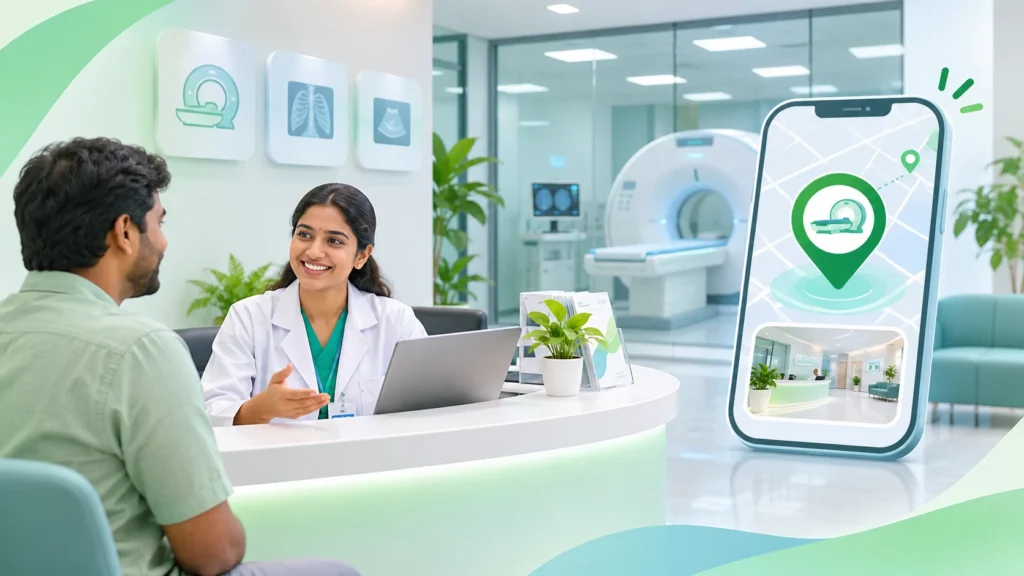
Establishing a scan centre is not solely about making people aware of the fact that you are providing diagnostic imaging solutions. The individuals ought to be able to find your office, know what kinds of scans are carried out there, check the working hours, and reach out to you for the correct information. To solve this problem, I suggest designing a simple online presence allowing to provide this data. Thanks to the TokoGen concept of neighborhood-based search, owners of scan centres will get a new opportunity to advertise their services to people seeking for medical care facilities nearby.
Patients searching for MRI, CT scan, ultrasound, or X-ray centers want to make sure that they can find the information they need before going to visit. They need to learn whether the services are available in your centre, how to reach you, whether they need appointments, and how to receive the reports.
I believe that making this information easy to access represents a significant opportunity for improving visibility of the scan centre. The use of TokoGen can be an element of a larger local business discovery strategy.
Why Does Online Visibility Matter for Your Scan Centre?
Online visibility helps people discover a scan centre when searching for diagnostic imaging services in their area.
Even an established centre with suitable equipment and qualified professionals may be difficult for new patients to find if its business information is missing or outdated.
How Can Online Discovery Benefit a Diagnostic Centre?
Improve local discoverability: People searching for nearby imaging facilities can more easily identify relevant centres.
Make contact information accessible: Patients can locate a telephone number, address, and operating hours.
Explain available services: Clear descriptions help users distinguish between centres offering different imaging procedures.
Reduce unnecessary enquiries: Accurate information can answer common questions before someone calls.
Support informed decisions: Transparent service information allows patients to compare suitable facilities and confirm requirements.
For example, someone referred for an MRI scan may first search for nearby facilities offering the specific examination mentioned in their referral.
Quick Takeaway: Online visibility helps patients find useful information about your scan centre. I recommend prioritizing accurate service descriptions, location details, and accessible contact options.
How Do Patients Find a Scan Centre Near Them?
People often discover diagnostic centres through healthcare professional referrals, online searches, local recommendations, and business directories.
I recommend understanding these different discovery methods because they serve different needs.
What Information Do People Search For?
Common searches may include:
- Scan centre near me.
- MRI scan centre near me.
- CT scan centre in my city.
- Ultrasound scan centre nearby.
- X-ray centre near my location.
- Diagnostic imaging centre with weekend hours.
A patient may already have a medical referral and simply need an appropriate facility that offers the prescribed examination.
How Can I Support This Search Process?
I recommend making your centre’s service list, accurate address, operating hours, and contact information easy to locate.
For a requested medical examination, patients should confirm the exact scan protocol, preparation requirements, and clinical suitability with their referring clinician and the imaging centre.
Quick Takeaway: Patients often search for a specific diagnostic service rather than a general healthcare business. I suggest describing only the examinations your centre actually offers and making enquiries straightforward.
What Challenges Do Scan Centre Owners Face With Online Discovery?
Scan centres may struggle to attract enquiries when people cannot find complete, reliable business information.
What Are the Most Common Visibility Problems?
Incomplete profiles: Missing contact numbers, addresses, or service descriptions create confusion.
Outdated operating hours: Incorrect timings can result in unnecessary visits.
Unclear diagnostic services: A generic description may not explain whether the centre offers MRI, CT, ultrasound, or X-ray services.
Limited local visibility: New residents may not know about a centre even if it has operated for years.
Inconsistent business information: Different addresses or telephone numbers across platforms can make contacting the facility difficult.
I recommend solving these practical issues before investing heavily in advertising.
Quick Takeaway: Scan centres often face online discovery problems because important business information is incomplete or inconsistent. I suggest reviewing existing profiles and correcting inaccuracies first.
How Can TokoGen Help Your Scan Centre Become Easier to Discover?
TokoGen is a neighbourhood-focused information and business discovery platform.
Its approach is relevant to scan centre owners who want to present their business information in an organized way and make it easier for nearby people to learn about their services.
Which Discovery Benefits Should Scan Centre Owners Look For?
Business presentation: Display a recognizable business name and a clear description.
Service information: Explain available diagnostic imaging services using straightforward language.
Contact details: Help interested users identify how to reach your centre.
Location information: Make it easier to understand where your facility operates.
Professional photographs: Show appropriate images of the reception area, entrance, and facilities.
Neighbourhood relevance: Present useful information to people exploring local healthcare businesses.
I recommend reviewing TokoGen’s business resources to understand which business profile features are currently available and how your centre can participate.
TokoGen should be treated as an informational discovery channel. Any appointment confirmation, medical assessment, scan procedure, payment, or report delivery must follow the processes of the healthcare provider.
Quick Takeaway: TokoGen can be explored as an additional channel for presenting scan centre information. I recommend verifying the available listing features and keeping patient arrangements under the centre’s direct control.
What Information Should You Include in Your Scan Centre Profile?
A complete scan centre profile should answer the most important questions a prospective patient might have.
What Details Should Be Displayed?
| Business Information | Why It Matters |
| Centre name | Helps users identify your facility |
| Address | Helps people locate the centre |
| Contact number | Allows direct enquiries |
| Operating hours | Helps people plan their visit |
| Available scan types | Clarifies the services provided |
| Appointment requirements | Explains how to arrange a visit |
| Preparation guidance | Directs patients to approved instructions |
| Accessibility details | Helps people plan access |
| Report collection information | Explains the centre’s stated process |
| Applicable credentials | Supports transparent business information |
I recommend using accurate photographs rather than unrelated stock images.
For example, a genuine image of your reception area may help visitors recognize the facility when they arrive.
Avoid publishing patient photographs, scan images, reports, or personal information without appropriate authorization and a lawful basis.
Quick Takeaway: A well-prepared scan centre profile should provide clear, current and useful information. I recommend including contact details, actual services, opening hours, and relevant facility information.
How Can You Present Diagnostic Services Clearly?
Diagnostic imaging services should be described accurately so people understand what is available at the centre.
I recommend separating the services into clear categories instead of using one broad statement such as “all types of scans available.”
How Should I Organize Scan Services?
| Diagnostic Service | Useful Information to Display |
| MRI | Available examination types and enquiry process |
| CT scan | Services offered and referral requirements |
| Ultrasound | Examination availability and centre-specific instructions |
| X-ray | Available examinations and operating hours |
| Doppler ultrasound | Actual services provided and appointment requirements |
| Mammography | Availability and specialist contact information |
Only include services your centre is appropriately equipped, staffed and authorized to provide.
Should I Publish Preparation Instructions?
I recommend providing only preparation instructions approved by the centre’s qualified clinical team.
Preparation can vary by examination, medical history, and scan protocol.
Avoid issuing universal instructions about fasting, medications, contrast, or other clinical requirements without appropriate professional review.
Quick Takeaway: Clear diagnostic service information helps people understand whether a centre may meet their needs. I recommend publishing accurate service lists and directing patients to qualified staff for medical instructions.
How Can You Build Trust With Accurate Business Information?
Trust matters especially in healthcare because patients need dependable information and appropriately qualified services.
I recommend presenting verifiable facts rather than promotional claims such as “100% accurate results” or “guaranteed diagnosis.”
Which Compliance Details Should Scan Centres Verify?
In India, diagnostic imaging facilities may be subject to different requirements depending on their equipment, procedures, and location.
For example:
AERB requirements: Facilities using regulated diagnostic X-ray equipment, including CT systems, must obtain the applicable approvals or licences from the Atomic Energy Regulatory Board.
PC-PNDT requirements: Ultrasound clinics and other facilities covered by the Pre-Conception and Pre-Natal Diagnostic Techniques law must comply with applicable registration and operational requirements.
Clinical establishment rules: Relevant national or state clinical establishment laws may also apply.
I recommend checking the official AERB diagnostic radiology guidance and applicable state health authority requirements.
How Can I Communicate Trust Professionally?
Display verifiable registration information where appropriate, describe actual staff qualifications accurately, and explain service procedures without exaggeration.
Quick Takeaway: Trustworthy scan centre marketing depends on accurate information and genuine compliance. I recommend verifying legal requirements and avoiding unsupported medical quality claims.
How Can You Improve Local Search Visibility?
Local search visibility makes it easier for people to find a diagnostic centre when searching for relevant services nearby.
I recommend combining accurate business listings with useful website content.
1. Maintain a Google Business Profile
An eligible diagnostic centre can use Google Business Profile to present its address, telephone number, opening hours and relevant business information.
2. Use Clear Service Descriptions
Describe available diagnostic services using terms patients and referring healthcare professionals commonly understand.
3. Maintain Consistent Business Details
Ensure the centre name, address and telephone number are accurate across relevant listings.
4. Publish Useful Local Information
Provide practical details about access, parking, appointment procedures and report collection where applicable.
5. Use Suitable Local Discovery Platforms
I recommend exploring relevant neighbourhood business directories, including TokoGen, to identify additional opportunities to present your centre.
Quick Takeaway: Local SEO supports discoverability when search engines and users can understand what your centre offers. I suggest prioritizing accuracy, useful information and consistent business profiles.
How Can You Turn Online Discovery Into Genuine Enquiries?
More online views do not automatically mean more confirmed appointments.
I recommend making the enquiry process clear and evaluating whether the information provided actually helps people contact the centre.
What Should an Effective Enquiry Process Include?
Accessible telephone number: Make it easy for people to contact the reception team.
Service-specific enquiries: Help callers confirm whether the required examination is available.
Appointment information: Explain how appointments are arranged and confirmed.
Clear financial information: Communicate applicable charges and payment arrangements accurately.
Privacy protection: Avoid requesting sensitive medical details through public comments or unsecured channels.
How Can I Measure Enquiry Conversion?
Consider this hypothetical example:
A diagnostic centre receives 400 website visits and 32 genuine enquiries during one month.
Enquiry conversion rate = (32 ÷ 400) × 100 = 8%.
This is an illustrative calculation, not an industry benchmark.
I recommend monitoring confirmed appointments and completed services separately, using appropriately aggregated data.
Quick Takeaway: Online visibility becomes commercially useful when interested people can make genuine enquiries. I suggest measuring relevant business outcomes while protecting patient information.
What Marketing Mistakes Should Scan Centre Owners Avoid?
Healthcare marketing requires more care than ordinary retail advertising.
I recommend avoiding the following mistakes.
1. Making Unsupported Medical Claims
Do not promise guaranteed results, perfect accuracy or better clinical outcomes without appropriate evidence.
2. Advertising Services That Are Not Available
Only promote diagnostic examinations your centre actually provides.
3. Publishing Misleading Prices
If prices depend on examination type, protocols or additional requirements, explain the conditions clearly.
4. Sharing Patient Information Without Authorization
Protect patient identities, records and examination details.
5. Using Fake Reviews
Never create fabricated testimonials or encourage misleading patient feedback.
6. Ignoring Compliance Requirements
Review applicable rules for diagnostic equipment, clinical operations, healthcare advertising and data protection.
Quick Takeaway: Responsible scan centre marketing should help people make informed decisions. I recommend avoiding exaggerated claims, inaccurate listings and privacy violations.
How Can You Measure and Maintain Your Scan Centre’s Online Visibility?
I recommend tracking meaningful indicators instead of focusing only on the number of profile views.
Which Metrics Should I Monitor?
| Metric | What It Measures |
| Business profile views | Visibility of published business information |
| Website visits | Traffic reaching the centre’s website |
| Phone enquiries | Calls from prospective patients or representatives |
| Relevant service enquiries | Interest in specific scans |
| Confirmed appointments | Appointments arranged through the centre |
| Enquiry conversion rate | Proportion of visitors making contact |
| Incorrect listing reports | Business information requiring updates |
How Often Should I Review These Details?
I suggest checking public business information whenever services, operating hours, equipment availability, contact details or access arrangements change.
Monthly reviews of aggregated enquiry data can help identify information gaps.
Quick Takeaway: Effective digital visibility management combines accurate profiles with measurable enquiry activity. I recommend reviewing performance regularly without compromising patient confidentiality.
How Can You Get Started With TokoGen?
A scan centre owner interested in TokoGen can begin by exploring the platform and checking its current business participation options.
What Steps Should I Follow?
- Visit TokoGen.
- Review the available business information and participation guidance.
- Check whether your scan centre category is supported.
- Prepare your centre’s business name, address, working hours and contact details.
- Organize accurate service descriptions and suitable facility photographs.
- Complete the available business profile process, if supported.
- Review the published information and update it when necessary.
I recommend treating TokoGen as one component of your wider digital visibility strategy rather than relying on a single platform.
Any prospective patient should continue to confirm scan availability, preparation instructions, appointments and other medical arrangements directly with your centre.
Quick Takeaway: Getting started with TokoGen begins with reviewing available business participation options and preparing accurate information. I recommend maintaining a useful profile that helps people understand and contact your scan centre.
Frequently asked questions
How can I promote my scan centre online?
Start with accurate business information, a complete Google Business Profile, relevant service descriptions and a professional website where practical. I recommend also exploring suitable local discovery platforms such as TokoGen to increase the number of places where people can find your centre.
Can TokoGen help people discover my scan centre?
TokoGen's neighbourhood business discovery approach is relevant to businesses seeking local visibility. I recommend checking its current category and listing options before creating a profile. The platform should not be assumed to guarantee enquiries, appointments or patient referrals.
What information should I include in my scan centre listing?
Include the centre name, address, working hours, contact details and diagnostic services actually available. I recommend adding genuine facility photographs and clear appointment instructions. Avoid publishing patient records or unsupported medical claims.
Do I need a website to promote my diagnostic centre?
No, a dedicated website is not the only way to build visibility. A Google Business Profile and relevant local listings can provide useful information. However, I recommend considering a website when you need detailed service pages, preparation guidance and more control over content.
How can I attract more enquiries for MRI and CT scan services?
Make the available examinations easy to identify, maintain accurate local listings, and provide clear contact options. I recommend confirming actual equipment availability and appointment procedures before promoting particular services. Clinical decisions must remain with qualified healthcare professionals.