Online Grocery Shopping: How to Buy Fresh Groceries and Save Money
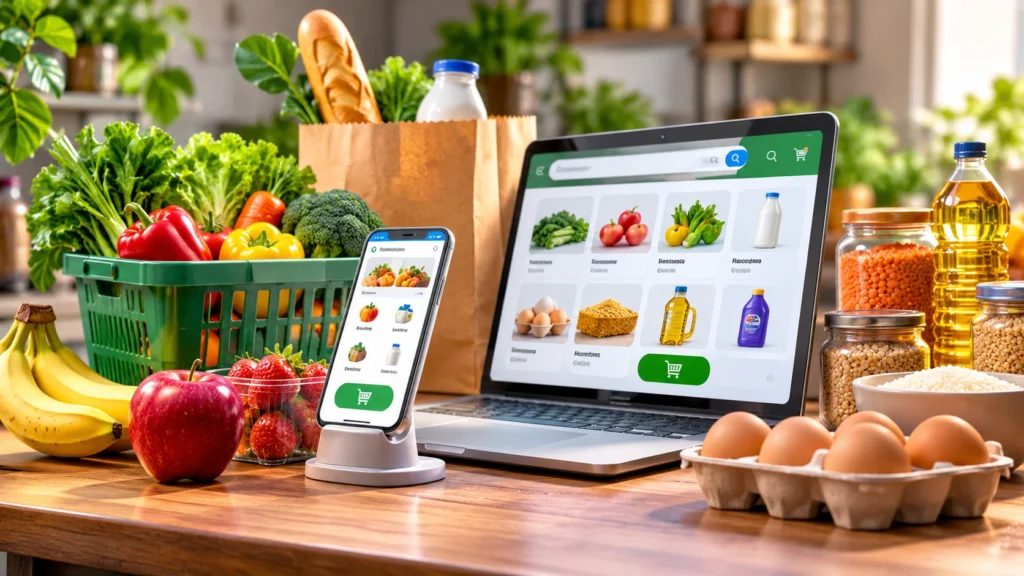
Online Grocery Shopping helps people purchase fruits, vegetables, dairy products, rice, cooking essentials, and other household items without visiting multiple stores. However, the smartest way to buy groceries online is to compare product quality, quantities, delivery charges, and total costs before placing an order. I recommend creating a shopping list, choosing reliable sellers, and checking food freshness to avoid unnecessary spending and disappointing purchases.
Shopping for groceries is a regular household responsibility, but it doesn’t have to involve crowded supermarkets, long billing queues, or repeated visits for forgotten essentials.
I prefer a planned approach that starts with understanding what a household actually needs. Online Grocery services can make that process easier by providing product information, prices, availability, and delivery or pickup options in one place.
Before shopping, I recommend reviewing a list of grocery and daily essentials for every household. It helps organise purchases and avoid overlooking frequently used items.
In this guide, I explain how online grocery shopping works, how to identify reliable stores, and how to buy fresh products while keeping household spending under control.
What Is Online Grocery Shopping?
Online Grocery Shopping is the process of purchasing food, beverages, and household essentials through websites or mobile applications instead of visiting a physical shop.
Customers can browse product categories, select quantities, compare prices, and choose available delivery or pickup arrangements.
What Products Can You Purchase Online?
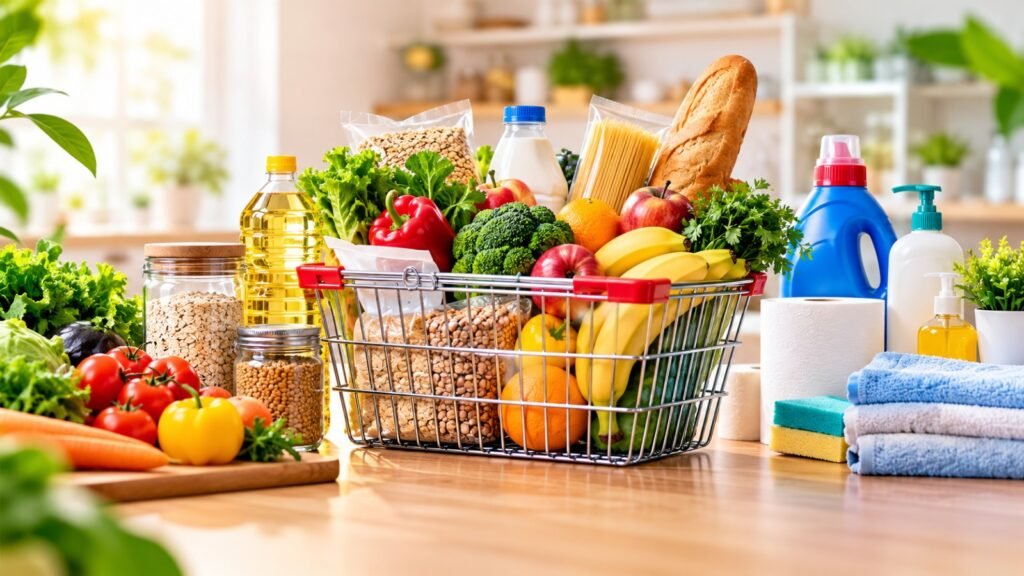
Most grocery shopping services offer several everyday product categories.
| Grocery Category | Common Products |
|---|---|
| Fruits & Vegetables | Tomatoes, onions, apples, bananas, leafy greens |
| Dairy Products | Milk, curd, paneer, butter, cheese |
| Rice & Grains | Rice, wheat flour, oats, millets |
| Pulses & Lentils | Toor dal, moong dal, chickpeas |
| Cooking Essentials | Oil, salt, sugar, spices |
| Meat & Seafood | Chicken, fish, prawns |
| Snacks & Beverages | Biscuits, tea, coffee, juices |
| Household Essentials | Cleaning supplies, detergents, tissues |
Product availability varies by store and delivery location.
For instance, someone preparing weekly meals might purchase vegetables, milk, eggs, rice, and cooking oil in one order instead of visiting several different shops.
Quick takeaway: Online Grocery Shopping allows customers to browse, compare, and order daily essentials digitally. Delivery availability, product range, and service conditions depend on the seller.
How Does Online Grocery Shopping Work?
Online grocery platforms generally connect customers with supermarkets, grocery retailers, or other food sellers through a digital shopping interface.
1. Product Discovery
Customers search for products using names, categories, brands, or nearby store listings.
2. Product Selection
The platform displays available sizes, quantities, prices, and relevant product details.
3. Cart Management
Customers add products to a virtual shopping basket and adjust quantities before checkout.
4. Delivery or Pickup Selection
Depending on the seller, customers may choose home delivery or collection from the shop.
5. Payment and Order Confirmation
The customer reviews the final amount and completes the available checkout process.
6. Order Preparation and Fulfilment
The seller prepares the items and arranges collection or delivery. Order tracking may be available.
For example, a household might add a 5 kg bag of rice, 1 litre of cooking oil, vegetables, and dairy products to a basket before reviewing the complete purchase.
The American Heart Association’s online grocery shopping guide also recommends checking stock availability, comparing costs, and planning delivery or pickup times.
American Heart Association
Quick takeaway: Online grocery shopping typically involves product discovery, cart selection, checkout, order preparation and delivery or pickup. Customers should review final prices and order conditions before paying.
How Can You Buy Groceries Online in 8 Simple Steps?
I recommend following these eight steps to make grocery purchases more organised and avoid common ordering mistakes.
Step 1: Prepare a Grocery Shopping List
Start by checking what is already available in your kitchen.
Separate the items into essentials, fresh produce, and optional products.
For example, if you already have enough rice and cooking oil, avoid adding them simply because a discount appears.
Step 2: Choose a Reliable Grocery Store
Review store details, available products, delivery coverage, customer support information, and applicable policies.
When selecting local sellers, I recommend comparing store quality and convenience rather than focusing exclusively on discounts.
Step 3: Check Product Details
Review brand names, weights, pack sizes, ingredients, and available expiry or shelf-life information.
A low price is not necessarily a better deal if the quantity is smaller.
Step 4: Compare Grocery Prices
Compare products using consistent units, such as price per kilogram or price per litre.
This makes it easier to evaluate similar products offered in different package sizes.
Step 5: Add Products to Your Cart
Select the quantities you actually need.
Avoid stocking more perishable food than you can consume safely.
Step 6: Review Delivery Charges
Check minimum order values, handling charges, delivery fees, and any other applicable costs.
A product discount may be offset by additional checkout charges.
Step 7: Confirm Payment and Delivery Details
Verify your delivery address, contact number, selected items, total amount, and estimated fulfilment time.
Step 8: Inspect the Delivered Groceries
Check product quantities, packaging condition, expiry dates, and the condition of fresh items.
Report missing, damaged, spoiled, or incorrect products through the seller’s support process.
Quick takeaway: The safest approach to buying groceries online is to plan purchases, compare reliable sellers, check complete costs, confirm the order and inspect products after delivery.
What Are the Top 8 Benefits of Online Grocery Shopping?
Online grocery services offer several practical advantages when customers use them carefully.
1. Saves Shopping Time
Customers can browse products without travelling to stores or waiting at billing counters.
This can be particularly helpful for people managing busy work schedules.
2. Makes Price Comparison Easier
Digital product listings can make it easier to compare brands, quantities, and selling prices.
However, I recommend checking the final checkout amount rather than relying on advertised discounts.
3. Supports Planned Household Purchases
A digital shopping list makes it easier to track frequently used items.
Customers can organise groceries by meal plans, purchase frequency, and household needs.
4. Provides Convenient Delivery Options
Where supported, stores can deliver purchased items directly to a customer’s address.
This may benefit people with limited transport options or difficulty carrying heavy grocery bags.
5. Helps Control Unplanned Spending
Shopping with a prepared list can reduce unnecessary purchases.
The American Heart Association identifies meal planning, running cart totals, and fewer impulse purchases as potential advantages of online grocery shopping.
American Heart Association
6. Helps Customers Discover Different Products
Online listings can make it easier to find alternative brands, package sizes, and specialty food items.
7. Supports Repeat Purchases
Some platforms allow customers to view previous orders and reorder commonly purchased products.
This can make regular shopping more convenient.
8. Helps Customers Explore Local Grocery Stores
Digital business directories can help shoppers discover supermarkets and neighbourhood retailers they might otherwise overlook.
Quick takeaway: Online grocery shopping can save time, improve purchase planning, simplify comparisons, and make everyday essentials more accessible. Actual savings depend on product pricing, fees, and shopping habits.
How Can You Choose a Reliable Online Grocery Store?
Choosing the right grocery retailer is essential because product freshness, fulfilment quality, and customer support vary between sellers.
I recommend evaluating grocery stores using five practical factors.
Product Quality
Look for accurate descriptions, trustworthy product information, and clear packaging standards.
Transparent Pricing
Check whether the displayed price matches the product quantity and final checkout amount.
Delivery Coverage
Verify that the store serves your location and offers suitable delivery or collection arrangements.
Customer Support
Look for clear contact options and procedures for resolving missing, incorrect, or damaged orders.
Refund and Replacement Policies
Understand which items qualify for a refund or replacement and how quickly issues must be reported.
| Evaluation Factor | What I Recommend Checking |
|---|---|
| Product freshness | Packaging, storage conditions, product dates |
| Pricing | Unit price, delivery fees, total amount |
| Delivery | Location coverage, available slots |
| Store information | Business details, contact options |
| Customer support | Complaint and resolution process |
| Returns | Refund and replacement conditions |
For a more detailed local retail checklist, explore TokoGen’s guide on how to choose the right local grocery store.
Quick takeaway: A reliable online grocery store should provide accurate product information, transparent prices, appropriate storage, clear delivery arrangements, and accessible customer support.
How Can You Save Money When Shopping for Groceries Online?
Online shopping does not automatically mean lower grocery expenses. I recommend comparing actual costs before assuming that an advertised offer will save money.
Compare Unit Prices
Suppose two rice products have these prices:
| Product | Pack Size | Price | Price per kg |
|---|---|---|---|
| Rice A | 5 kg | ₹350 | ₹70 |
| Rice B | 10 kg | ₹650 | ₹65 |
Rice B costs ₹5 less per kilogram.
A household purchasing 10 kg would spend ₹700 on two packs of Rice A, compared with ₹650 on Rice B.
That creates a potential saving of ₹50 before other charges.
These are illustrative prices and calculations, not live retailer quotes.
Plan Weekly and Monthly Purchases
Buy fresh products according to consumption and storage capacity.
Purchase longer-lasting staples in larger quantities only when the unit price is lower and the household can use them before their quality declines.
Review Discounts Carefully
Check whether coupons require minimum purchase values or apply only to selected brands.
Compare the Final Basket Total
Include product prices, delivery charges, handling fees, applicable taxes and discounts.
Avoid Purchasing Unnecessary Items
I recommend treating discounts as a secondary consideration. The first question should be whether the household actually needs the product.
Quick takeaway: Save money on online groceries by comparing unit prices, planning quantities, checking offer conditions and reviewing the final amount payable. Bulk buying helps only when the goods can be used and stored appropriately.
Which Grocery Items Should You Buy Online?
I recommend choosing products based on how frequently they are used, how easily their quality can be assessed, and whether the store can deliver them safely.
Fresh Fruits and Vegetables
Purchase according to meal plans and expected consumption.
Consider whether the seller provides freshness information and appropriate delivery arrangements.
Rice, Grains and Pulses
These are often suitable for planned monthly purchases because many dry staples have longer storage periods when handled correctly.
Milk and Dairy Products
Check available date information and verify that the retailer uses suitable refrigeration and transportation.
Cooking Oils and Spices
Compare pack sizes, ingredients, product dates, and packaging.
Meat and Seafood
Buy from sellers that handle temperature-sensitive products appropriately. Ensure they arrive sufficiently chilled or frozen, as applicable, and refrigerate them promptly.
Household Cleaning Essentials
Products such as detergent, tissues, and cleaning supplies are convenient to purchase together with regular household orders, but they should be packed separately from food to prevent contamination.
Quick takeaway: Choose online grocery items according to household demand, shelf life, delivery handling, and storage requirements. Pay particular attention to fresh and temperature-sensitive foods.
How Can You Check Grocery Quality and Freshness During Online Shopping?
Checking food quality matters because customers cannot always examine products physically before purchasing them online.
I recommend reviewing food information before ordering and inspecting the products immediately after delivery.
Check Product Dates and Labels
For packaged food, review the expiry or use-by date, manufacturer details, quantity, and storage instructions.
The Tamil Nadu Food Safety Department explains that use-by dates relate to safety, while best-before dates generally relate to product quality.
Check Fresh Produce
Inspect fruits and vegetables for visible damage, spoilage, unusual discolouration, or other signs of deterioration.
Inspect Packaging
Avoid accepting products with broken seals, leaking containers, or damaged packaging that compromises safety.
Check Chilled and Frozen Products
Dairy products, meat, seafood, and frozen groceries require appropriate handling and temperature control.
The FSSAI food safety regulations provide guidance for safe food receiving and storage.
FSSAI
Report Quality Problems
If a seller fails to resolve a food-safety complaint, Indian consumers can use the FSSAI Food Safety Connect grievance system for eligible concerns.
Quick takeaway: Check labels, expiry dates, packaging, freshness and temperature-sensitive products when buying groceries online. Report unsafe or incorrectly supplied products promptly.
Is Online Grocery Shopping Better Than Offline Grocery Shopping?
Both methods have advantages. The better option depends on your household needs, local store availability, transportation, and shopping preferences.
| Factor | Online Grocery Shopping | Offline Grocery Shopping |
|---|---|---|
| Convenience | Shop remotely | Travel to the store |
| Product inspection | Depends on photos and descriptions | Inspect products directly |
| Price comparison | Compare listings digitally | Compare shelf prices |
| Delivery | May be available | Usually carry items yourself |
| Product availability | Depends on listed stock | See current shelf stock |
| Delivery charges | May apply | Usually none for self-collection |
| Fresh produce selection | Selected by seller or staff | Select items yourself |
| Order history | Often available digitally | Depends on the retailer |
I recommend online grocery shopping for planned household essentials when trustworthy sellers and reasonable delivery options are available.
Offline shopping may be preferable when customers want to personally select specific fruits, vegetables, meat, or seafood.
A combination of both approaches can work well.
Quick takeaway: Online grocery shopping is useful for convenience and organised purchases, while offline shopping offers direct product inspection. Choose based on freshness, total cost, available time, and personal needs.
What Common Mistakes Should You Avoid When Buying Groceries Online?
Even experienced customers can overlook small details that affect their grocery orders.
1. Shopping Without a List
A missing shopping list can lead to unnecessary purchases and forgotten essentials.
2. Ignoring Product Quantities
Always confirm whether the listed price applies to grams, kilograms, litres, units, or multipacks.
3. Choosing Products Based Only on Discounts
A discounted item may have a higher unit price than another available option.
4. Overlooking Delivery Charges
Calculate the complete order cost before making payment.
5. Ignoring Food Expiry Information
Review available product dates before checkout and verify them after delivery.
6. Ordering Excess Fresh Produce
Buying too many perishable items can increase food waste.
7. Using Unverified Sellers
Check seller details, applicable food registration information, and support arrangements.
8. Failing to Review the Delivered Order
Inspect the groceries promptly so that missing or damaged products can be reported within the seller’s complaint window.
Quick takeaway: Avoid online grocery shopping mistakes by planning quantities, comparing complete prices, checking product safety information, choosing reliable sellers, and verifying delivered items.
How Can TokoGen Help People Discover Local Grocery Stores?
TokoGen focuses on connecting people with neighbourhood shops, products and everyday services.
For online grocery shoppers, local discovery can help identify nearby supermarkets, independent grocery stores, and other retailers offering household essentials.
Its website describes a shopping journey built around discovering shops, viewing products, comparing available details, and exploring collection or delivery arrangements.
LocalConnect
I believe local grocery discovery should help customers answer three important questions: What products are available? How much do they cost? How can I collect or receive them?
One important distinction is that TokoGen’s current public website presents previews of its planned shopping experience. It does not currently process grocery orders or payments directly through the landing page.
Quick takeaway: TokoGen’s local shopping concept is relevant for discovering nearby businesses and exploring product information, while actual purchasing options should be confirmed with the provider.
Conclusion: How Can You Make Online Grocery Shopping Smarter?
Online Grocery Shopping becomes more useful when customers focus on quality, quantity, convenience, and the total cost of each order.
I recommend preparing a grocery list, comparing reliable retailers, checking available delivery options, and reviewing product information before making a purchase.
For households managing weekly vegetables, dairy products, and monthly pantry essentials, a structured shopping routine can make everyday purchasing simpler.
If you’re exploring neighbourhood shopping options, visit TokoGen’s local shop and product discovery guide to understand how local retailers, available products, and shopping journeys can be connected.
The most effective grocery shopping decision is not always the fastest or cheapest one. It is the one that provides suitable products, reasonable value, and dependable service.
Frequently asked questions
What is Online Grocery Shopping?
Online Grocery Shopping means buying food and household essentials through a website or mobile app. Customers can browse items, compare prices, and choose available delivery or pickup options without visiting the store.
How do I buy groceries online for the first time?
Choose a reliable store, create a shopping list, add products to your cart, review the total price, and select a delivery or pickup option. I recommend starting with a small order to understand the seller's service quality.
Is Online Grocery Shopping cheaper than supermarket shopping?
Not always. Online stores may offer discounts, but delivery and handling charges can increase the final amount. I recommend comparing the same products, quantities, and complete basket costs before deciding.
How can I find grocery delivery near me?
Search for online grocery stores serving your neighbourhood and verify their delivery coverage. Local business directories can help you discover nearby sellers, but you should confirm current availability directly.